
Through the Eyes of Locals
What the Nabataeans Understood About Water
Petra is a city in a desert canyon, yet it held perhaps 20,000 people. The Nabataeans pulled this off not by finding water, but by mastering it — catching every drop of rain, taming every flash flood, and storing it in the rock. Their water system is the real wonder of Petra.
The problem
A capital without a river
Petra has no river and little rain — under 200mm a year, mostly in short winter storms. A city of 20,000 cannot exist on that without extraordinary management. The Nabataeans, originally nomadic traders who knew every spring and wadi in the region, understood the desert’s water better than almost anyone of their age. They turned a waterless valley into a capital.
The system
Catch, slow, store
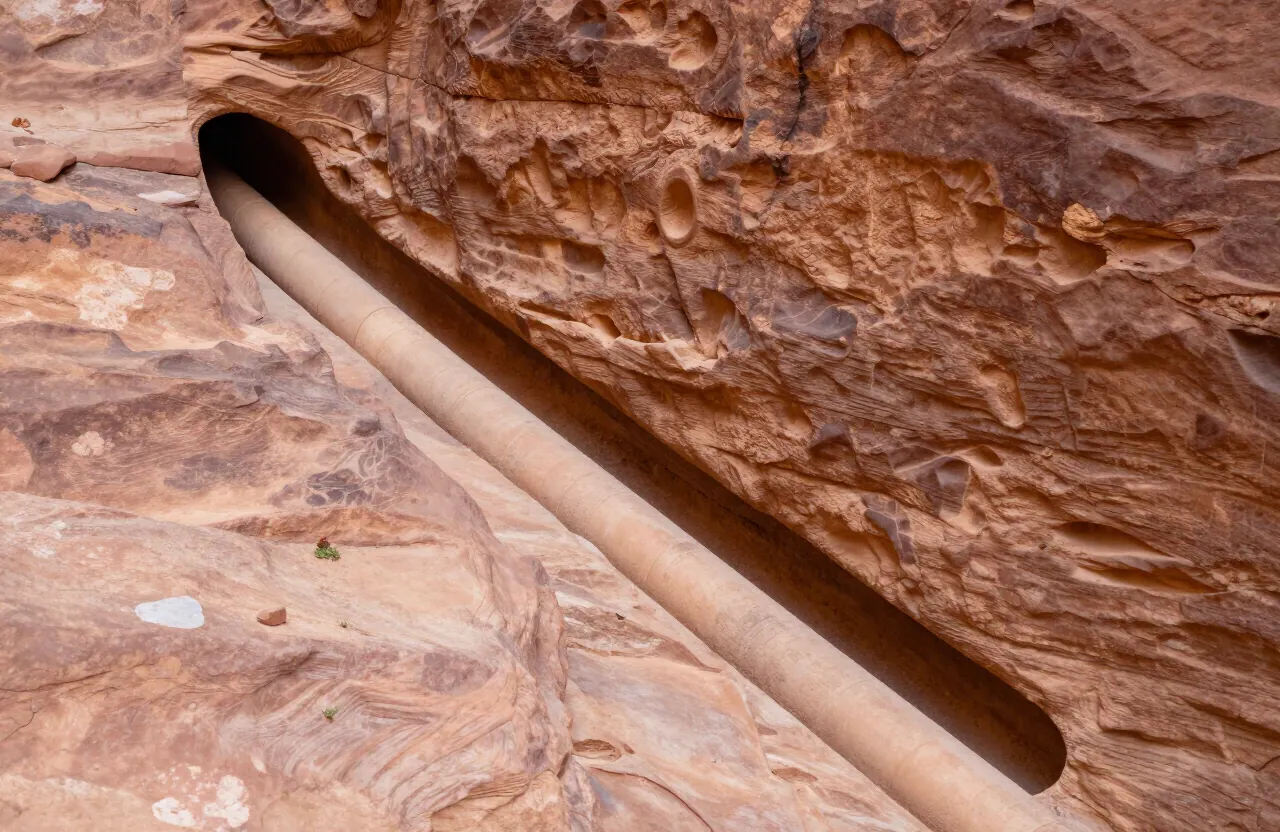
The system had three parts. Catch: channels cut into the cliffs and along the Siq gathered runoff from the entire basin. Slow: dams across the wadis broke the force of flash floods — the same floods that today close the Siq in winter. Store: hundreds of cisterns, carved underground and lined with waterproof plaster, held the water through the dry months. Pipes and gravity fed it to fountains and baths across the city.
You can still see it: the channels in the Siq walls, the dam at the Siq’s entrance, the cistern mouths beside the tombs. Read our water system page for where to look.
The lesson
They worked with the desert
The Nabataeans did not fight the desert; they read it. They knew which slopes shed water, which rock held it, which wadis would flood. Their engineering was distributed and subtle — many small interventions rather than one grand aqueduct — and it was robust enough that parts of it still function today. Standing in Petra in the heat, it is worth remembering that the most advanced thing here is not a facade but a channel.
See it through local eyes
Tell us what drew you to this story, and we will build a private Jordan journey around it — with a guide who knows the place behind the page.