
Through the Eyes of Locals
What the Petra Landscape Tells Us
Petra’s landscape is not scenery — it is the substance of the place. The sandstone, the wadis, the colours and the light are why the city was built here and why it still moves people. Learn to read it and Petra makes sense on its own terms.
The rock
Sandstone you can shape
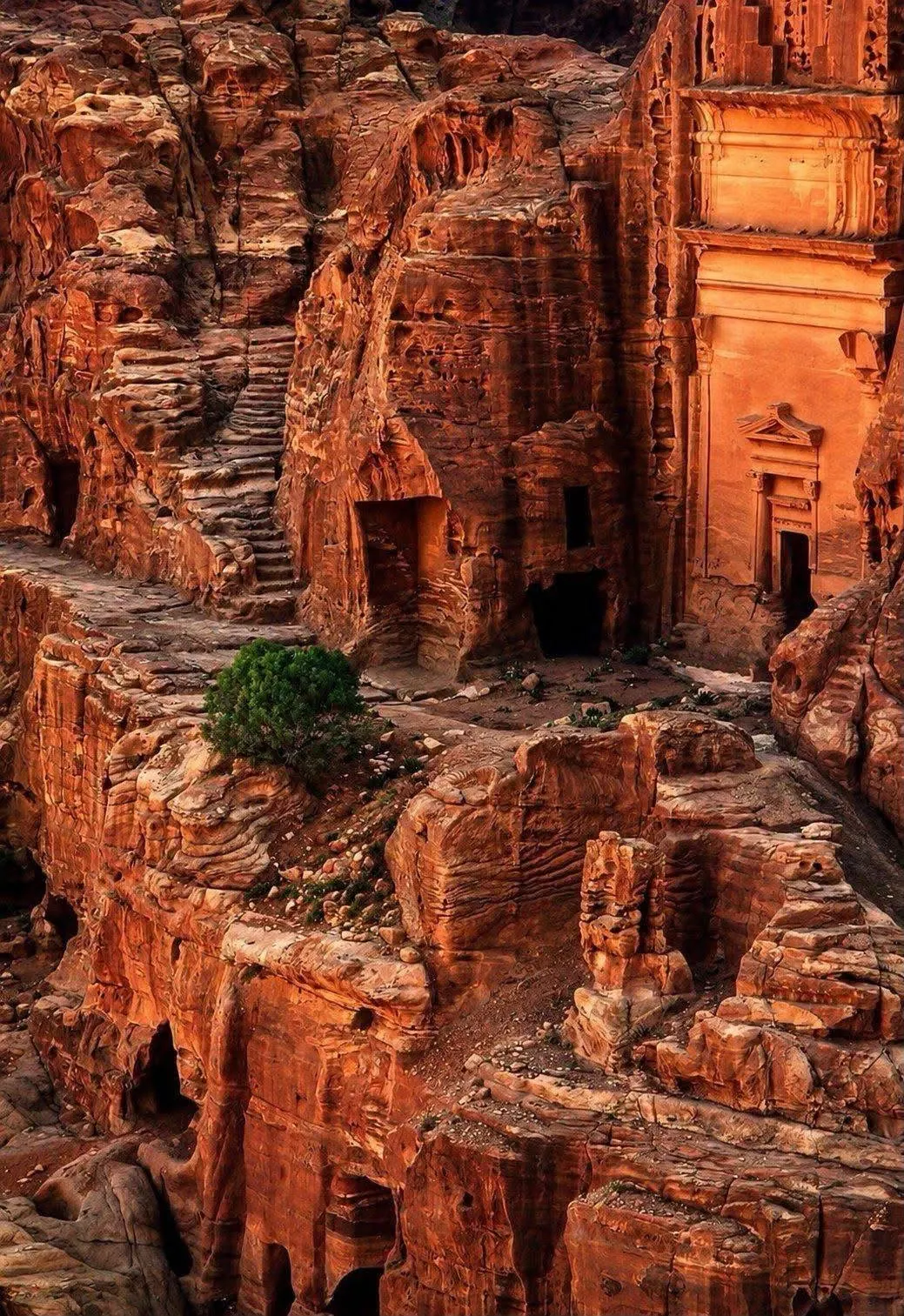
Petra’s cliffs are sandstone — layered, soft when cut, hardening as it weathers. That is why the Nabataeans carved tombs into it rather than building freestanding monuments: the rock gave them architecture for the cost of labour, and it has outlasted most of what they built above ground. The striations you see in the facades are the geological layers, revealed by the carving.
The colour
Why it is “rose-red”
The famous “rose-red city, half as old as time” is real, but the colour shifts through the day. Morning light is cool and pink; midday is pale; late afternoon turns the stone deep orange and red. The colour is iron oxide in the sandstone, and it is why photographers chase the last hours of the day. The landscape is a different place at 8am and at 5pm.
The wadis
Valleys that organise the city
Petra is built along wadis — dry river valleys that channel water and people. The main wadi runs from the Siq through the city centre; side wadis branch into the tombs and the back trails. The city’s layout follows the water, which is why it can feel scattered until you realise the wadis are the streets. Walk the wadis and the plan becomes clear.
The light
A canyon of shadows and shafts
Because Petra is a canyon city, the light is dramatic and directional — shafts through the Siq, facades lit for an hour then in shade, deep shadows in the side wadis. The Nabataeans designed with this: some facades are positioned to catch a specific beam at a specific time. The landscape is a collaborator in the architecture, and the best way to feel it is simply to be there at the edges of the day.
See it through local eyes
Tell us what drew you to this story, and we will build a private Jordan journey around it — with a guide who knows the place behind the page.