
Jordan · Photography
Jordan for Photographers
Jordan is a photographer’s country — rose sandstone, red desert, Roman columns and a candlelit canyon. The light is the whole game, and timing beats equipment every time. Here is how to photograph Jordan well.
The light rule
Timing beats gear
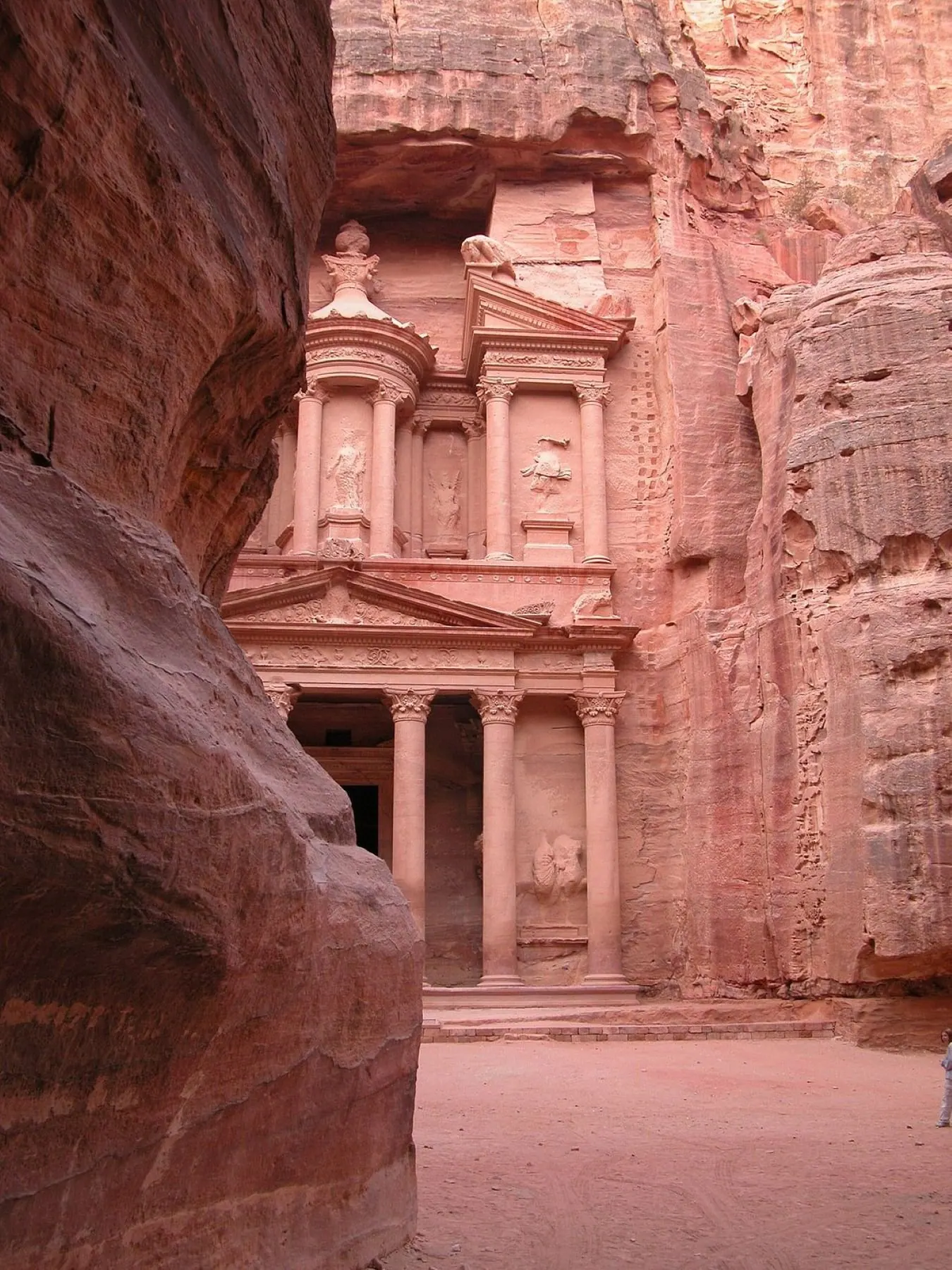
The Treasury is a morning subject — the sun reaches it through the Siq shortly after opening, and by mid-morning the facade is fully lit and the crowds have arrived. Arrive at 6am for clean frames. The Royal Tombs and the Monastery are afternoon subjects — they face west and catch warm light late in the day. Plan two Petra days to light the whole site.
In Wadi Rum, the hour before sunset turns the sandstone blood-red; the dunes are best in low side-light. Jerash’s columns glow in the last hour of afternoon sun. See our full Petra photography guide for the hour-by-hour breakdown.
Shoot list & timing
- Treasury
- 06:00–09:00, morning light, fewest people
- Royal Tombs
- Late afternoon, west-facing, warm
- Monastery
- Afternoon into golden hour
- The Siq
- Early morning — shafts of light, empty
- Wadi Rum dunes
- Hour before sunset, low side-light
- Jerash
- Last hour of afternoon sun on columns
Gear & practical
Desert conditions
Dust is the enemy — keep a UV filter on and a microfibre cloth handy, and change lenses with the camera pointed down, away from wind. A wide-angle (16–35mm) and a medium telephoto (70–200mm) cover most of Jordan; a tripod helps for Petra by Night and Wadi Rum star shots. Bring extra batteries — cold desert nights drain them fast.
Drones are restricted and require permits; assume you cannot fly. Always ask before photographing people, especially Bedouin women — a polite gesture and a smile, and respect a no.
Turn this knowledge into a journey
Tell us your dates, your pace and who is travelling, and we will shape a private Jordan journey around it — through local eyes.