
Jordan · Customs & Etiquette
Jordanian Customs & Etiquette
A little cultural awareness transforms a trip to Jordan. The country is relaxed and forgiving with visitors, but understanding the courtesies — hospitality, tea, dress, greetings, religion — opens doors and changes how warmly you are received.
Hospitality
The heart of the culture
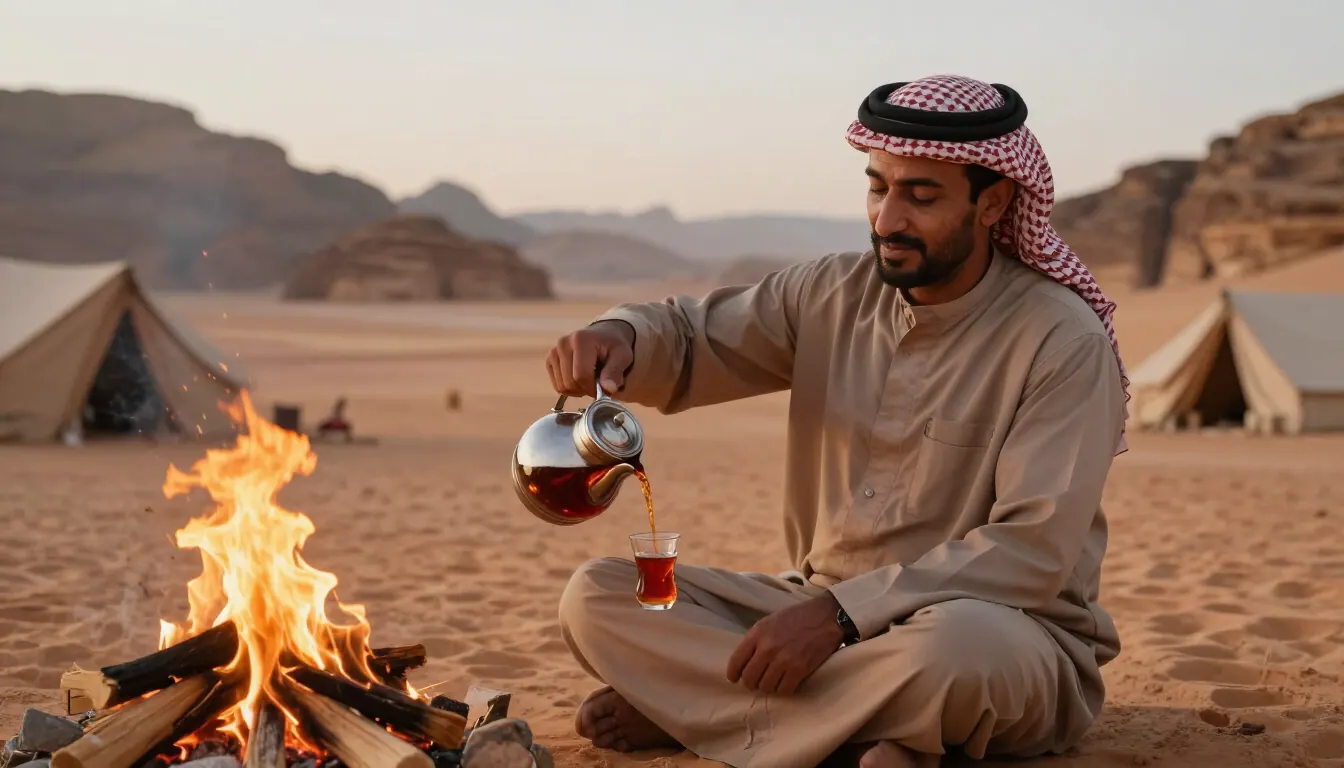
Hospitality (diyafa) is the central Jordanian virtue, and you will meet it constantly — offers of tea, help with directions, invitations to share a meal. It is genuine, not a sales tactic. Accept tea when it is offered (it is rude to refuse outright), stay a moment, and return the warmth. A small “shukran” goes a very long way.
Do not feel obliged to buy something because tea was offered, but be gracious. If someone invites you to their home, it is usually sincere — and an experience you will remember.
Quick courtesies
- Greetings
- “Ahlan” / “Marhaba” — right hand to shake
- Tea
- Accept it; it is the universal welcome
- Dress
- Cover shoulders and knees
- Mosques
- Headscarf for women, shoes off, no prayer-time visits
- Photography
- Always ask, especially of women
- Eating
- Right hand only if sharing; try everything
Greetings & the right hand
Small things, big meaning
Use your right hand for eating, shaking hands, giving and receiving — the left is considered unclean. A handshake with “ahlan” or “marhaba” is the standard greeting; close male friends may kiss cheeks. If a woman does not extend her hand, a polite nod is the right response. Learn “shukran” (thank you), “min fadlak” (please) and “la, shukran” (no, thank you) — they will carry you far.
Religion & sensitivity
A Muslim country, relaxed with visitors
Jordan is predominantly Muslim, with a significant Christian minority; the two communities live interwoven. Dress modestly, especially in towns and at religious sites. Don’t eat, drink or smoke in public during daylight in Ramadan out of respect (your hotel will still feed you). Avoid drinking alcohol outside licensed venues, and never offer it to a local. Friday is the weekly day of rest; some shops close, but tourist sites stay open.
For the deeper traditions behind these courtesies, see our article on Jordanian traditions visitors should understand.
Turn this knowledge into a journey
Tell us your dates, your pace and who is travelling, and we will shape a private Jordan journey around it — through local eyes.