
Jordan · Hiking
Jordan for Hikers
Jordan is a seriously good hiking country — canyons, plateaus, desert wadis and a hidden city you reach on foot. The walking is the best way to see Petra properly and to reach parts of the country no bus reaches. Here is where to walk.
The headline walks
Where to put your boots
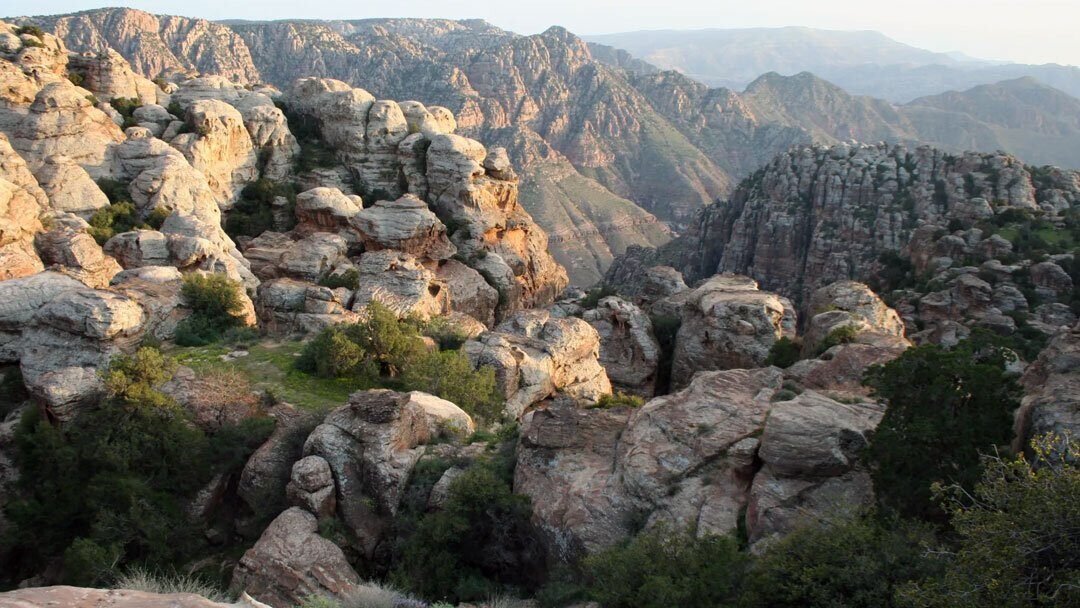
Petra’s back trails — the Back Trail to the Monastery, the High Place of Sacrifice, Wadi Farasa — are the best hiking in the country for history-per-kilometre. Dana Biosphere Reserve offers the dramatic Dana–Petra trek and day walks from the village. Wadi Mujib is a wet canyon scramble (seasonal). Wadi Rum on foot, with a Bedouin guide, is desert hiking at its purest.
The Jordan Trail, a 650km route the length of the country, ties much of this together — most walkers do it in sections rather than end to end.
Key hikes
- Petra Back Trail
- To the Monastery via Wadi al-Khayl — long, rewarding
- High Place of Sacrifice
- Steep climb, panoramic descent via Wadi Farasa
- Dana–Petra trek
- Multi-day, ~5 days, canyon and plateau
- Wadi Mujib siq
- Wet canyon scramble, Apr–Oct, guided
- Wadi Rum on foot
- Day walks or multi-day with Bedouin guide
- Season
- Spring & autumn only — summer is dangerous
Seasons & safety
Walk when it is cool
Hike only in spring (March–May) or autumn (September–November). Summer heat is genuinely dangerous in the canyons and desert; winter brings flash floods. Carry far more water than you think you need (3–4 litres for a long Petra day), start at dawn, tell someone your route, and do not attempt remote trails alone — a local guide transforms the experience and the safety.
For Petra’s trails specifically, see our Petra trails page with distances and difficulty, and the article on approaching the Monastery.
Turn this knowledge into a journey
Tell us your dates, your pace and who is travelling, and we will shape a private Jordan journey around it — through local eyes.