
Through the Eyes of Locals
Why Petra Was Built Where It Was
Cities are not placed by accident. Petra sits in a hidden valley behind a narrow gorge, above a water basin, at the meeting of trade routes. Every part of its location answered a problem the Nabataeans had to solve. Here is why this exact spot became a capital.
Hidden
A city you cannot see
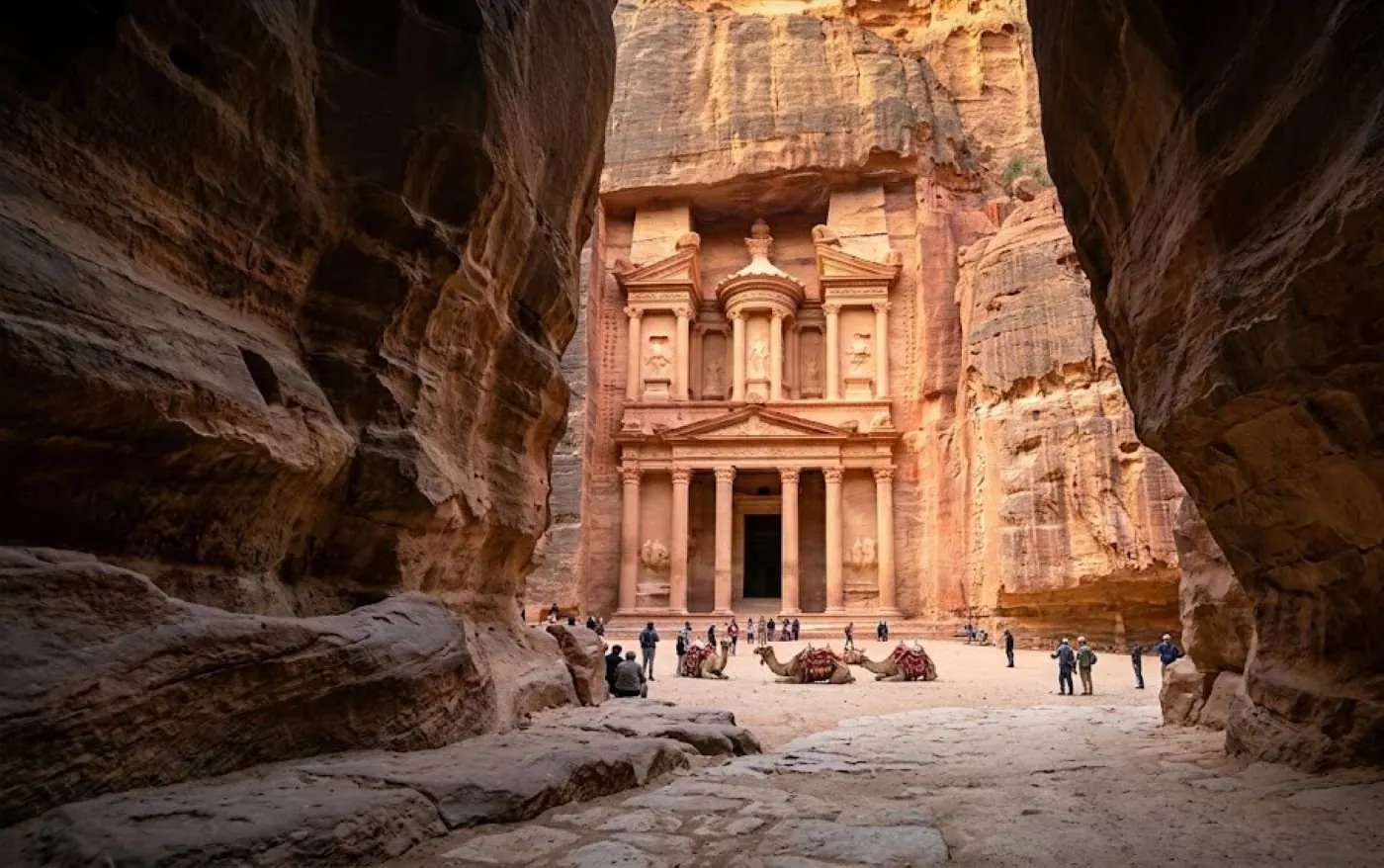
Petra is invisible until you are inside it. The city sits in a basin enclosed by cliffs, reached only through the Siq — a kilometre-long fissure so narrow that two people can barely walk abreast. For a trading people who carried wealth through dangerous country, this was a fortress without walls. You could not find Petra, and you could not take it by surprise.
Water
A basin that caught rain
The same basin that hid the city also collected its water. The surrounding hills shed their winter rain into the valley, and the Nabataeans engineered it into a year-round supply — see what the Nabataeans understood about water. Few places in the region offered both secrecy and water in one site. Petra did.
Trade
At the crossroads
Petra sat on the trade routes that linked Arabia, the Levant and Egypt — the incense and spice roads that made the Nabataeans rich. Control of this junction meant control of the trade. The location was not just defensible and watered; it was where the money flowed. A capital needs all three, and Petra had them.
The rock
Carvable sandstone
One more thing: the sandstone. Petra’s cliffs are soft enough to carve and hard enough to last — the reason the city is famous for its facades. The Nabataeans turned the geology itself into architecture. The landscape was not a backdrop; it was the building material. See what the Petra landscape tells us.
See it through local eyes
Tell us what drew you to this story, and we will build a private Jordan journey around it — with a guide who knows the place behind the page.